Will the Greenwich Property Market Crash?

And if it does … who will be the winners and losers?

Those Greenwich people wanting property values to drop would be those 30 or 40 something’s, sitting on a sizeable amount of equity and hoping to trade up (because the percentage drop of your current ‘cheaper’ property will be much less than the same percentage drop of the more expensive propertyand trading up is all about the difference). If you have children planning to buy their first home or you are a 20 something wanting to buy your first home – you want them to drop. Also, landlords looking to add to their portfolio will want to bag a bargain (or two) and they would love a drop!

Yet, if you have recently bought a Greenwich property with a gigantic mortgage, you’ll want Greenwich property values to rise. If you are retired and are preparing to downsize, you will also want Greenwich property values to rise (because you will have more cash left over after the move). Also, if you, a landlord looking to sell your portfolio or a Greenwich home owner, who has remortgaged to raise money for other projects (meaning you have very little equity), you will want Greenwich property values to rise to enable you to put a bigger deposit down on the next purchase.

So, before I discuss my thoughts on the future, it’s important to look at the past…

The last property crash, caused by the Global Financial Crisis, was between Q3 2007 and Q3 2009 … when property values in Greenwich dropped 9.47%

…taking an average property from £236,410 in September 2007 to £214,017 by September 2009 … and since then – property values have over the medium-term risen (as can be seen on the graph). 

Screen Shot 2018-06-26 at 11.58.51.png

So … what is happening now?

The simple fact is people in the UK are moving less (and hence buying and selling less). Estate agents up and down the land are blaming “Brexit” for this but the reality is that the problems in the British housing market are a lot greater than measly old Brexit!

There is a direct link between how people feel about the property market (sentiment) and the actual performance of the property market. However, the question of whether people’s sentiment moves as a result of changes in the property market, or whether changes in the property market drive sentiment is a question that baffles most economists – you see if someone feels assured about their financial situation (job, money etc.) and the future of property, they are more likely to feel assured to spend their hard-earned earnings on property and buy and if you think about it … vice versa. So, I believe Brexit isn’t the issue  – it’s just the “go to” excuse people are using. Humans don’t like uncertainty, and Brexit itself is causing uncertainty – it is, after all, the great unknown.

So, is it the flux of global politics? Politics are causing hesitation in the posh £5m+ markets of Mayfair and other high value Monopoly board pieces – but certainly not in sleepy old Greenwich (I don’t think Greenwich is too high up on the house buying list of all these Saudi Prince’s and Russian Oligarchs) … no the issues are much closer to home.

So, coming back to reality, one the biggest driving factors in the current state of play in housing market has been the part Buy To let landlords have played in the last 15 years. Making money as buy to let landlord in these golden years was as easy as falling off a log – but not anymore! Landlords had been getting off quite lightly when it came to their tax position, but with Osborne changing the taxation rules on buy to let … things have become a little more difficult for landlords.

Landlords have been hit with a supplementary rate of stamp duty, meaning they pay 3% more stamp duty than first time buyers. High rate taxpayers in the past have been able to offset the interest payments from their buy to let mortgages against their self-assessment tax bills – at their marginal rate. Between now and 2020 … this is being reduced in small steps, so they will only be able to claim back relief at the basic rate of tax. The bottom line is that it will be much tougher for investors to make money on buy to let. Tied in with this, the mortgage rules were changed a few years ago, meaning it’s also become slightly tougher to obtain buy to let mortgages (although if I’m being honest – they need too).

And what of Greenwich first time buyers? Well, a few weeks ago in my blog on the Greenwich Property Market, if you recall, I mentioned that last year was the best year for over decade for first time buyers. For the last 30 years, buy to let investors have constantly had more purchasing power than first time buyers, as they were older and more established, together with their tax breaks. Yet, now as many amateur landlords are having second thoughts in staying in buy to let, this has given first time buyers a chance to get on to the property ladder.

What will happen to Greenwich property values? The simple fact is we don’t have the conditions that caused the crash in 2007 (i.e. sub-prime lending in the US, causing banks not to lend to each other, thus stalling the global economy as a whole). Assuming everyone is sensible on the Brexit negotiations, the biggest issue is interest rates.  As long as interest rates remain comparatively low (and don’t get me wrong – I think we could stand Bank of England base interest rates at 1.5% to 2.5% and still be OK, then the thought of a massive property market crash still looks improbable.

Yet correspondingly, I cannot see Greenwich property values rising quickly either.

The double-digit growth years in property values between 1999 and 2004 are well gone. A lot of that growth was caused by an explosion of buy to let landlords buying property to accommodate the influx of EU migrants in those years.  Mark Carney at the Bank of England can’t make interest rates any lower, so it’s difficult to envisage how credit conditions can get any easier!

Balance of probabilities … Greenwich property values will hover either side of inflation over the next five years, but if we did have another crash, what exactly would that mean to Greenwich homeowners – if they dropped by the same percentage amount, as they did in the last crash?

If Greenwich property prices dropped today by the same percentage as they did locally in the Global Financial Crisis back in 2007/9 … we would only be returning to the property values being achieved in November 2015 … and nobody was complaining about those!

Therefore, looking at the number of people who have bought homes in the area since November 2015, that would affect approximately only 17% of local home owners and landlords … and only a small percentage would actually lose – because you only lose money if they decide to move (and come to think of it, some of those sellers would fall into the category mentioned above that would relish a price drop!). So, really not many people would lose out.

Interesting don’t you think?
Greenwich Property Values 0.3% higher than year ago – What’s the PLAN to fix the Greenwich Property Market?

It’s been nearly 18 months since Sajid Javid, the Tory Government’s Housing Minister published the White Paper “Fixing the Broken UK Housing Market”, meanwhile Greenwich property values continue to rise at 0.3% (year on year for the council area) and the number of new homes being constructed locally bumps along at a snail’s pace, creating a potential perfect storm for those looking to buy and sell.

The White Paper is important for the UK and Greenwich people, as it will ensure we have long-term stability and longevity in property market as whole. Greenwich home-owners and Greenwich landlords need to be aware of these issues in the report to ensure they don’t lose out and ensure the local housing market is fit for purpose. The White Paper wanted more homes to be built in the next couple of decades, so it might seem counter-intuitive for existing home-owners and landlords to encourage more homes to be built and a change in the direction of housing provision – as this would appear to have a negative effect on their own property.

Yet the country needs a diversified and fluid property market to allow the economy as whole to grow and flourish … which in turn will be a greater influence on whether prices go up or down in the long term. I am sure every homeowner or landlord in Greenwich doesn’t want another housing crisis like we had in 1974, 1988 and most recently in 2008.

Now, as Sajid Javid has moved on to the Home Secretary role, the 17th Housing Minister in 20 years (poisoned chalice or journeyman’s cabinet post) James Brokenshire has been given the task of making this White Paper come alive. The White Paper had a well-defined notion of what the issues were.

The first of the four points brought up was to give local authorities powers to speed up house building and ensure developers complete new homes on time. Secondly, statutory methods demanding local authorities and builders build at higher densities (i.e. more houses per hectare) where appropriate. The other two points were incentives for smaller builders to take a larger share of the new homes market and help for people renting.

However, lets go back to the two initial points of planning and density.

(1) Planning

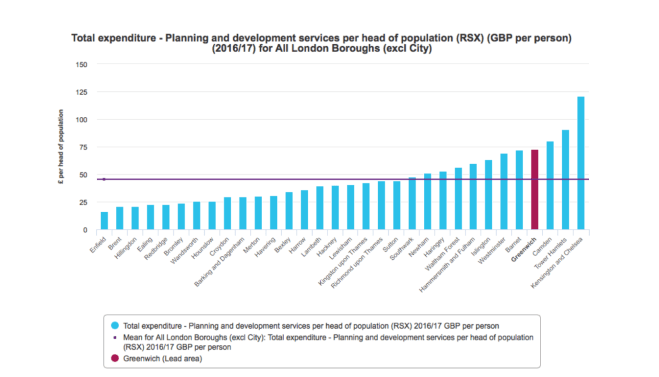
For planning to work, we need a robust Planning Dept. Looking at data from the Local Government’s Association, in Greenwich, the council is above the regional average, spending £72.91 per person for the Planning Authority, compared the regional average of £45.52 per head – which will mean the planning department should have no problem meeting those targets.

Screen Shot 2018-06-19 at 09.14.46

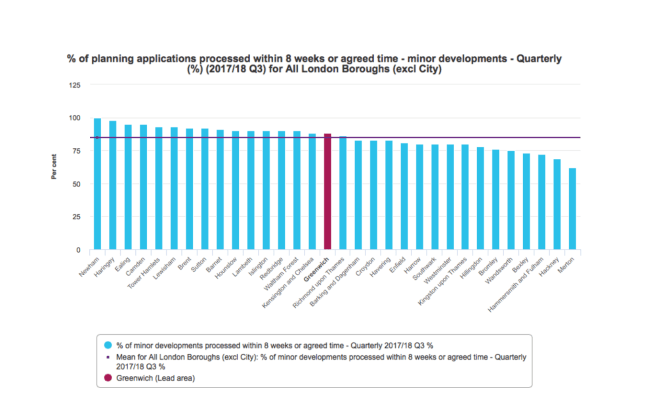
Also, 88% of planning applications are decided within the statutory 8-week initial period, above the regional average of 85% (see the graph below).  I am slightly disappointed and also pleased with the numbers for our local authority when it comes to the planning and the budget allowed by our Politician to this vital service.

Screen Shot 2018-06-19 at 09.14.55

(2) Density of Population

53.8 people live in every hectare (or 2.471 acres) in Greenwich

It won’t surprise you that 254,557 Greenwich residents are living in the urban conurbations of the authority, giving a density of 53.8 people per hectare (much lower than I initially thought)

I would agree with the Governments’ ambition to make more efficient use of land and avoid building homes at low densities where there is a shortage of land for meeting identified housing needs, ensuring that the density and form of development reflect the character, accessibility and infrastructure.

It’s all very good building lots of houses – but we need the infrastructure to go with it.

Talking to a lot of Greenwich people, their biggest fear of all this building is a lack of infrastructure for those extra houses (the extra roads, doctors surgeries, schools etc.). I know most Greenwich homeowners and landlords want more houses to be built to house their family and friends … but irrespective of the density … it’s the infrastructure that goes with the housing that is just as important … and this is where I think the White Paper failed to go as far as I feel it should have done.

Interesting times ahead I believe!

46% Drop in Properties For Sale Today in Greenwich Compared to 10 Years Ago

There is good news for Greenwich buy to let landlords as ‘top of the range’ well-presented properties are getting really decent rents compared to a year ago however, this rise in rents is thwarting many potential first time buyers from saving for both a deposit and money for a rainy day. On top of this, there is also a shortage of Greenwich homes coming on the market thus adding fuel to the slowdown and affecting not just Greenwich first time buyers but also those going up the housing ladder.

Whilst it is true that the Government’s initiatives, targeted at improving the supply of homes built and helping first time buyers obtaining necessary funding, are starting to work (albeit slowly), I also believe that to boost more existing home-owners and their properties onto the market, we as a Country, need to see a better focus placed on those looking to downsize (i.e. the mature generation).

If we took away some hurdles to home owners downsizing, such as removing stamp duty for those downsizers (as was done for first time buyers last year), together with encouraging even more first-time buyers with 100% mortgages to buy the smaller properties, this would in turn release more mid-range properties onto the market, which subsequently would encourage more mature homeowners to downsize from their bigger properties to buy those mid-range properties – thus completing the circle.

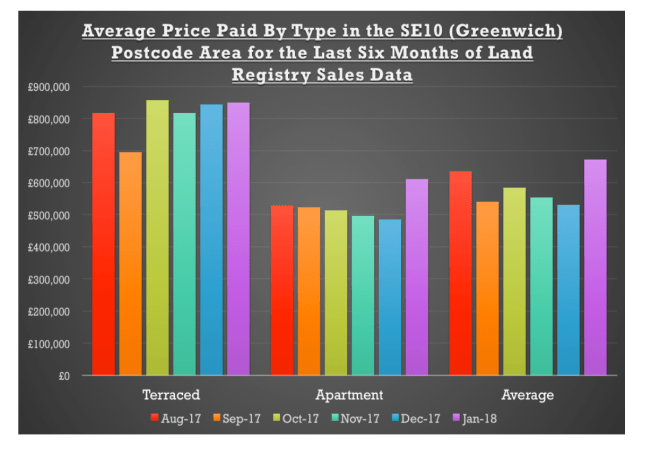
Looking at the most recent set of data from the Land Registry for Greenwich (the SE10 postcode in particular), the figures show the indifferent nature of the current Greenwich property market.

Only 530 Greenwich (SE10) Homes changed hands in the last 6 months

Greenwich property values and transactions continue to be sluggish, and the monthly peaks and troughs of house prices and properties changing hands doesn’t mask the deficiency of suitable realistically priced property coming onto the Greenwich property market, meaning the housing market is slowly becoming inaccessible to some would-be home owners.

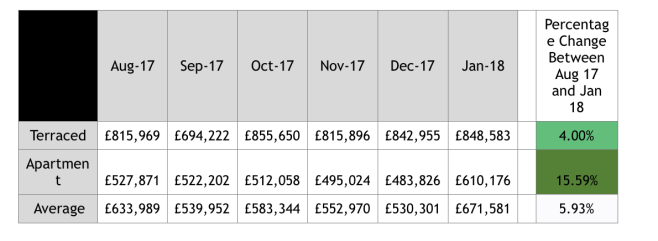
Looking at what each property type is selling for in SE10 (note the data from the Land Registry is always 4/5 months behind) makes interesting reading ….

Screen Shot 2018-06-13 at 09.51.33

Screen Shot 2018-06-13 at 09.51.40

One must remember these are the average prices paid, so it only takes a run of a few expensive or cheaper property types (as can be seen with the variance in the table) to affect the figures..

Looking at the numbers of properties for sale … I looked at my research for early Summer 2008, and at that time, 1,204 properties were on the market for sale in Greenwich.. and when I did my research on this article today, just 653 properties for sale.. a drop of 46%.

The Government needs to seriously consider the supply and demand of the UK property market as a whole to ensure it doesn’t seize up. It needs to do that with bold and forward-thinking plans but, in the meantime, people still need a roof over their head, so as local authorities don’t have the cash to build new houses anymore, it’s the job of Greenwich landlords to take up the slack. I must stress though, I have noticed a distinct ‘flight to quality’ by Greenwich tenants, who are prepared to pay top dollar for an exceptional home to rent.  If you want to know what tenants are looking for and what type of things you as a Greenwich landlord need to do to maximise your rental returns – drop me a line.

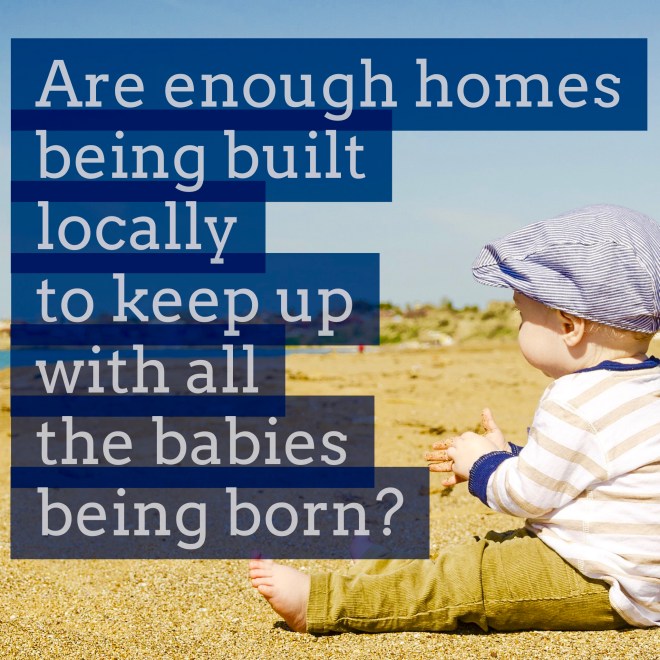
More Than Four Babies Born for Every New Home Built in the Past Five Years in Greenwich

219 facebook shaped

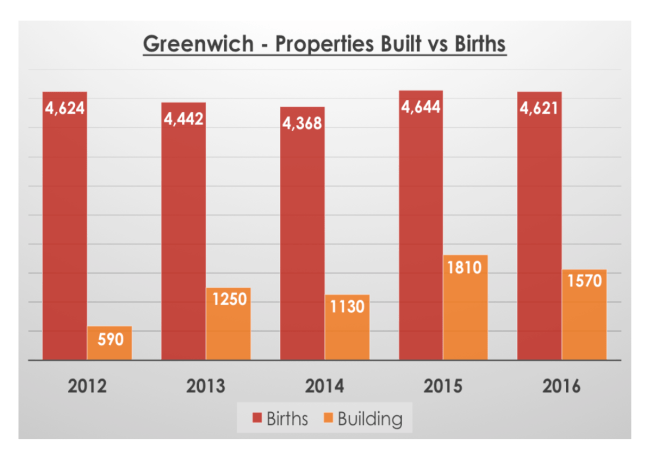
More than 4 babies have been born for every new home that has been built in Greenwich since 2012, deepening the Greenwich housing shortage.

This discovery is an important foundation for my concerns about the future of the Greenwich property market – when you consider the battle that todays twenty and thirty somethings face in order to buy their first home and get on the Greenwich property ladder. This is particularly ironic as these Greenwich youngsters’ are being born in an age when the number of new babies born to new homes was far lower.

This will mean the babies being born now, who will become the next generation’s first-time buyers will come up against even bigger competition from a greater number of their peers unless we move to long term fixes to the housing market, instead of the short term fixes that successive Governments have done since the 1980’s.

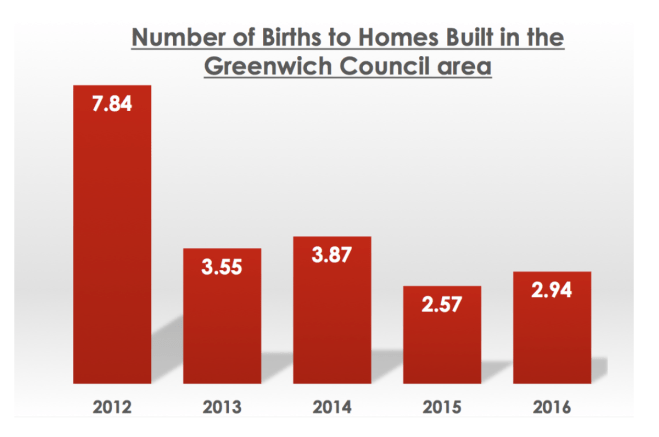
Looking at the most up to date data for the area covered by Greenwich Council, the numbers of properties-built versus the number of babies born together with the corresponding ratio of the two metrics …

Screen Shot 2018-06-09 at 09.46.16


Screen Shot 2018-06-09 at 09.46.22

It can be seen that in 2016, 2.94 babies had been born in Greenwich for every home that had been built in the five years to the end of 2016 (the most up to date data). Interestingly, that ratio nationally was 2.9 babies to every home built in the ‘50s and 2.4 in the ‘70s. I have seen the unaudited 2017 statistics and the picture isn’t any better! (I will share those when they are released later in the year).

Our children, and their children, will be placed in an unprecedented and unbelievably difficult position when wanting to buy their first home unless decisive action is taken. You see it doesn’t help that with life expectancy growing year on year, this too is also placing excessive pressure on homes to live in availability, with normal population growth nationally (the number of babies born less the number of people passing away) accumulative by two people for every one home that was built since the start of this decade.

Owning one’s home is a measure many Brits to aspire to. The only long-term measure that will help is the building of more new homes on a scale not seen since the 50’s and 60’s, which means we would need to aim to at least double the number of homes we build annually.

In the meantime, what does this mean for Greenwich landlords and homeowners? Well the demand for rental properties in Greenwich in the short term will remain high and until the rate of building grows substantially, this means rents will remain strong and correspondingly, property values will remain robust.

How Affordable is Property for Greenwich’s Average Working Families?

The simple fact is we are not building enough properties. If the supply of new properties is limited and demand continues to soar with heightened divorce rates, i.e. one household becoming two, people living longer and continued immigration, this means the values of those existing properties continues to remain high and out of reach for a lot of people, especially the blue collar working families of Greenwich.

Looking at some recent statistics released by the Government, the ratio of the lower quartile house prices to lower quartile gross annual salaries in Greenwich London Borough Council has hit 14.19 to 1.

What does that mean exactly and why does it matter to Greenwich landlords and homeowners?

If we ordered every property in the Greenwich London Borough Council area by the value of those properties, the average value of the lower quartile properties (i.e. lowest 25%) would be £325,000. If we then did the same, and ordered everyone’s salary in the same council area, the average of the lowest quartile (lowest 25%), the average salary of the lowest 25% is £23,045 pa, thus dividing one with the other, we get the ratio of 14.19 to 1. 

Assuming there is one wage earner in the house, the chances of a Greenwich working family being able to afford to buy their own home, when it’s over fourteen times their annual salary, is very slim indeed. The existing affordability crisis of people wanting to buy their own home is the unavoidable outcome of the decade on decade failure to build enough homes to keep up with demand. Nevertheless, improving affordability is not a case of just constructing more homes. Greenwich London Borough Council needs to ensure more properties are not only built, but built in the right locations and of the right type and at the right price to ensure the needs of these lower income working families are met, because at the moment, they presently have few options apart from the private rental sector.

Looking at the historic nature of the ratio, it can clearly be seen in the graph below that this has been an issue since the early to mid 2000’s.

218 facebook shaped

However, if one looks at the historic data, those on the bottom rung of the ladder (those in the lower quartile of wage earners) used to be housed by the local authority instead of buying. However, the vast majority of council houses were sold off in the 1980’s, meaning there are much fewer council houses today to house this generation.

Many of the lower quartile working class families were given a lifeline to buy their own homes in middle 2000’s, with 100% mortgages, but the with the credit crunch in 2009, that rug (of 100% mortgages) was rudely pulled from under their feet. You see it is cheaper to buy than rent … it’s the finding of the 5% deposit that is the challenging issue for these Greenwich working class families. So unless the Government allow 100% mortgages back, the fact is, demand for rental properties will outstrip supply.

In the long term, to alleviate that, I would suggest the Greenwich community hold their local politicians at Greenwich London Borough Council to account for the actions they could take to ensure the affordability of housing and the extent to which they work with private developers and housing associations and aggressively use the planning tools at their disposal to safeguard the local community getting the new households we need. Greenwich London Borough Council could make certain parcels of residential building land for private rented development only, eliminating the opportunity of the land being bought to develop large executive homes, which do not solve the current problem.

Yet in the short term, all this means is demand for rental properties will continue to grow, keeping Greenwich house prices high and Greenwich rents high.

3,291 Greenwich Landlords Plan to Expand Their Buy To Let Portfolios

RECTANGLE 217

A noteworthy number of buy to let landlords in Britain plan to buy more properties over the next year notwithstanding the frustrations, challenges and seismic changes in the private rented sector. According to Aldermore, the specialist Buy To Let lender, their research shows around 41% of portfolio buy to let landlord’s objective is to grow their buy to let portfolio (Portfolio landlords are landlords that own more than one property).

So, I thought, “Are Greenwich landlords feeling the same?” If so, if these numbers were applied to the Greenwich private rental market, what sort effect would it have on the Greenwich property market as whole?

Talking to the landlords I deal with, most are feeling quite optimistic about the future of the Greenwich rental market and the prospect it presents notwithstanding the doom and gloom prophecies that the property market will shrink. Many of those Greenwich landlords who are looking to enlarge their portfolio are doing so because they still see the Greenwich rental market as a decent investment opportunity.

With top of the range Bank and Building Society Savings Accounts only reaching 1.5% a year, the rollercoaster ride of Crypto currency and the yo-yoing of the Stock Market, the simple fact is, with rental yields in Greenwich far outstripping current savings rates, the short term prospect of a minor drop in property prices isn’t putting off Greenwich landlords.

The art to buying a Greenwich buy to let investment is to buy the profit on the purchase price, not the anticipation of the future sale price.

No matter what the historical economy has thrown at us, with the global meltdown in 2008/9, dotcom crash of 2000, ERM in 1992, the three day week, oil crisis and hyperinflation in the 1970’s (the list goes on) … the housing market has always bounced back stronger in the long term. That’s the point … long term. Investing in buy to let is a long-term strategy. The simple fact is, over the long term with the increasing demand for rental properties, predominantly among Millennials as many cannot afford to get on the property ladder, and with councils not building enough properties of any kind, many youngsters are having to resort the private rental market for their accommodation needs.

So, what of the numbers involved in Greenwich?

There are 3,687 landlords that own just one buy to let (BTL) property in Greenwich and 8,027 Greenwich landlords, who are portfolio landlords. Between those 8,027 Greenwich portfolio BTL landlords, they own a total of 16,847 Greenwich BTL properties and they can be split down into the size of landlord portfolio in the graph below….

graph217

If I apply the Aldermore figures that means 3,291 Greenwich landlords have plans to expand their BTL portfolio in the coming year or so.

However, the Aldermore Research also showed that 8% of private landlords intended to reduce the number of properties they own. They put this down to continuing Government intervention in the housing market (as many landlords mentioned too many limitations and higher taxation) while some believed that tenants are excessively protected to the disadvantage of the landlord.

I would say there is no repudiating that the buy to let market has taken a bit of a beating, thanks to a plethora of Government regulation, new mortgage underwriting rules in 2014 and George Osborne’s tax changes. Yet there still remains an overall consciousness of optimism among the vast majority of Greenwich buy to let landlords. Despite these latest changes, many landlords still view buy to let as a good investment, as long as you buy right and expand your portfolio taking into account the second rule of buy to let … assess your position on the ‘buy to let seesaw’ of capital growth and yield.

If you want to buy right and assess your own portfolio on the yield/capital growth seesaw … drop me a note. I don’t bite and the opinion I give, whether you are landlord of mine or not as the case may be, is given freely, without obligation or cost. The choice is yours. Thank you for reading this article. To read others, please visit my Greenwich Property Blog.

Extra Funding Is Required for Affordable Homes in Greenwich

RECTANGLE 216

In my blog about the Greenwich Property Market I mostly only talk about two of the three main sectors of the local property market, the ‘private rented sector’ and the ‘owner occupier sector’. However, as I often stress when talking to my clients, one cannot forget the third sector, that being the ‘social housing sector’ (or council housing as some people call it).

In previous articles, I have spoken at length about the crisis in supply of property in Greenwich (i.e. not enough property is being built), but in this article I want to talk about the other crisis – that of affordability. It is not just about the pure number of houses being built but also the equilibrium of tenure (ownership vs rented) and therein, the affordability of housing, which needs to be considered carefully for an efficient and effectual housing market.

An efficient and effectual housing market is in everyone’s interests, including Greenwich homeowners and Greenwich landlords, so let me explain ..

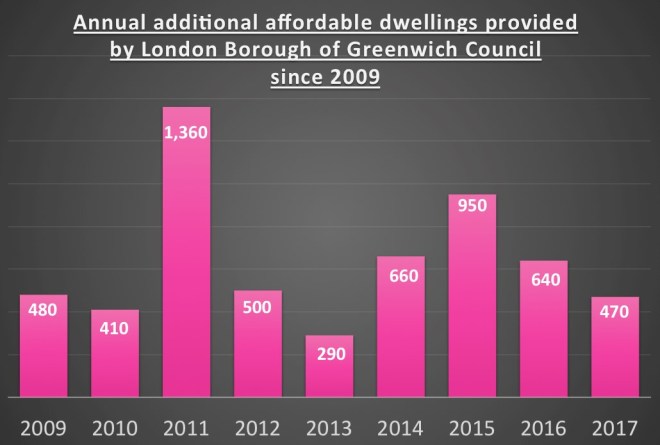
An average of only 640 Affordable Homes per year have been built by London Borough of Greenwich Council in the last 9 years

The requirement for the provision of subsidised housing has been recognised since Victorian times. Even though private rents have not kept up with inflation since 2005 (meaning tenants are better off) it’s still a fact there are substantial numbers of low-income households in Greenwich devoid of the money to allow them a decent standard of housing.

Usually, property in the social housing sector has had rents set at around half the going market rate and affordable shared home ownership has been the main source of new affordable housing yet, irrespective of the tenure, the local authority is simply not coming up with the numbers required. If the local authority isn’t building or finding these affordable homes, these Greenwich tenants still need housing, and some tenants at the lower end of the market are falling foul of rogue landlords. Not good news for tenants and the vast majority of law abiding and decent Greenwich landlords who are tarnished by the actions of those few rogue landlords, especially as I believe everyone has the right to a safe and decent home.

Be it Tory’s, Labour, SNP, Lib Dems, Greens etc, everyone needs to put party politics aside and start building enough homes and ensure that housing is affordable. Even though 2017 was one of the best years for new home building in the last decade (217,000 home built in 2017) overall new home building has been in decline for many years from the heady days of the early 1970s, when an average of 350,000 new homes were being built a year.  As you can see from the graph, we simply aren’t building enough ‘affordable’ homes in the area.

Graph216

The blame cannot all be placed at the feet of the local authority as Council budgets nationally, according to Full-Fact, are 26% lower than they have been since 2010.

So, what does this mean for Greenwich homeowners? Well, an undersupply of affordable homes will artificially keep rents and property prices high. That might sound good in the short term, but a large proportion of my Greenwich landlords find their children are also priced out of the housing market. Also, whilst your Greenwich home might be slightly higher in value, due to this lack of supply of homes at the bottom end of the market, as most people move up the market when they do move, the one you want to buy will be priced even higher.

Problems at the lower end of the property market will affect the middle and upper parts. There is no getting away from the fact that the Greenwich housing market is all interlinked .. it’s not called the Property ‘Ladder’ for nothing!

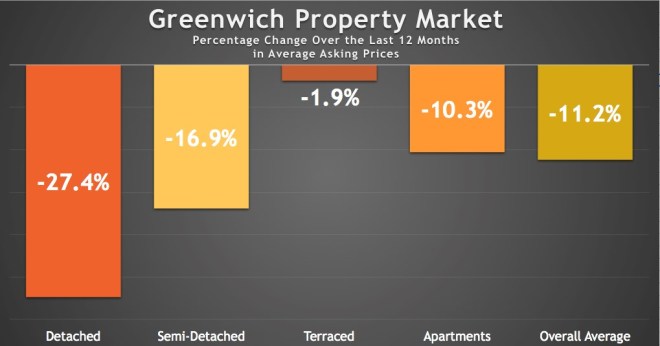
Greenwich Property Market – Asking Prices Down 11.2% in the Last 12 Months

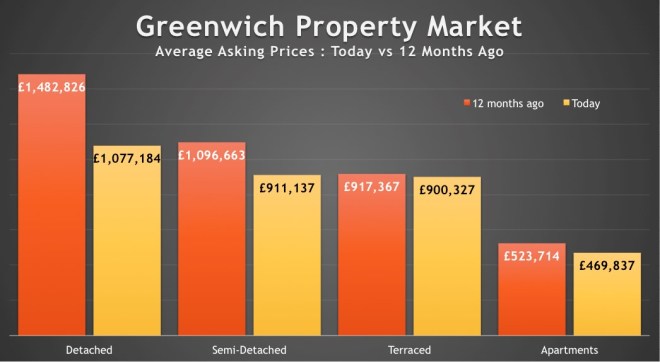
The average asking price of property in Greenwich dropped by 11.2% or £71,760 compared to a year ago, taking the current average asking price to £569,912 compared with £641,672 this time last year.

The overall drop in asking prices is being put down to sellers being more realistic with their pricing and looking to benefit from the impending mortgage interest rate rises later in 2018. This is great news for first, second and third time buyers in Greenwich starting their property hunting in the usually active spring market this year facing the opportunity of paying less for the property of their dreams. Even better news is that whilst first time buyers also have to pay less for their property, they also have the bonus of the Chancellor stopping Stamp Duty being paid by first time buyers!

Looking at the different sectors of the Greenwich property market, splitting it down into property types, one can see what is happening to each sector of the market with regard to their average asking prices now compared to a year ago. Firstly, looking at the Pound note amounts…

Graph 215 1

Interestingly, when one looks at the percentages, the most movement in average asking price pressure is in the detached and semi-detached property type sector.

Graph 215 2

Now, I must stress this overall drop in the asking prices of Greenwich property doesn’t necessarily mean the value of Greenwich property is going down by the same amount.

Only time will tell if the current levels of Greenwich asking prices is a correction of optimistic house sellers after a couple of months of enthusiastic asking price rises in the lead up to Christmas, or is it an initial sign that property values are slipping. To judge what is really happening to the Greenwich property market, I believe these asking prices must be viewed in conjunction with both the values achieved and the length of time it takes to sell the property.

Also, these figures are averages, so it might also mean less expensive types of Greenwich detached or semi-detached are on the market now, this dragging the average down, compared to a year ago.

One thought I would like to share with the Greenwich homeowners and landlords wanting to sell their property, is the fact they need to be aware of the competition of other people selling their homes. One factor that could be contributing to a subdued demand for local property is the progressively strained buyer mortgage affordability (i.e. banks telling people they can only afford so much on a mortgage), meaning more and more buyers are hitting their maximum on the amount they are able to borrow on a mortgage sooner than they thought.

So, what does this all mean, especially for buy to let landlords in Greenwich? During these months of flux, there could be some property bargains to be had. Lower asking prices mean you are buying in better yields and potential capital growth at the same time. Many Greenwich landlords pick the phone up or email me with Rightmove links, asking my opinion on the BTL potential of property. I don’t charge for that service, so if you don’t want to miss out on such opinion, follow what they do and make contact … I don’t bite!

£1,736 pcm – The Average Greenwich Rent

The rents paid by Greenwich tenants are now standing at £1,736 per calendar month (PCM), a rise of 2.17% year on year and 0.37% higher month on month.

However, this attention-grabbing monthly rent figure masks stark differences in the various different parts of the Greenwich rental market.  Demand in Greenwich for high quality family homes with two or three bedrooms in good catchment areas for schools remains really robust due to tenants wanting access to the schools.  Other influencing factors that make certain areas popular are the proximity to transport links. However, I have noticed a drop in demand (and thus rents achieved) for property where the landlord hasn’t kept the property fresh; in terms of decoration, carpets, replacement windows and poor heating.

So, what does all this mean for Greenwich landlords and tenants?

With the new tax rules for landlords, many believed that the number of rental properties would narrow throughout 2017, as landlords sold up their Buy to let properties and looked to invest their money elsewhere, but evidently this hasn’t happened (yet).  Feasibly Greenwich landlords are re-mortgaging their Greenwich buy to let properties instead, as they still believe it’s a safer investment than looking, say at the stock market?

However, demand remained strong in 2017 for Greenwich private rental properties, meaning the rents being achieved were at a decent level for landlords. Keeping your outgoings low is also an important consideration and so I looked on a well-known financial services comparison site this morning and found a High Street bank offering a 5-year fixed rate for Buy to let landlords with a 40% deposit/equity for 2.17% … I can remember (as I am sure many of my readers of this blog can) when mortgage rates were at 15% – this is cheap money!

Looking at property values in Greenwich, over the last 12 months and specifically at the lower of the market where buy to let landlords tend to buy their rental properties.  Flats/apartments have fallen in value by 1.35% whilst terraced properties have risen by 1.98%.

Some Greenwich landlords have seen the yields they are achieving remain squeezed.

However, most landlords can start to feel assured that as capital growth in Greenwich remains at a more realistic figure (good for long term stability in the property market) and long-term rents are on the rise, the overall corresponding annual return on investment (Annual ROI being annual capital + annual yield) has stabilised in all areas and is now starting to grow.

With additional people seeing renting as a long-term option, even with the challenges of the new tax regime, Greenwich landlords, with the support of a good advice and opinion, should continue to see renting as a good investment vehicle.

Greenwich Millennials Have Spent £231,801 On Rent By The Age of 35

The Millennials were born between the mid 1980’s and late 1990’s thus making them between the age of around 22 to late 30’s. They are the imaginative, artistic youngsters who grew up with the newest tech and computers and who are huge aficionados of music festivals, gourmet pizzas, emoji’s, selfies and old school nostalgia. Also known as Generation Rent, many Millennials have discovered that renting is a good choice for their shelter and accommodation needs without the hassle that comes from buying a home. Nonetheless, that is not the only reason they don’t buy property. When they should be concentrating on their profession, putting down roots and starting a family, Millennials are still going through the pressure and strain of student loan liabilities whilst, at the same time, finding it tough to pay rent.

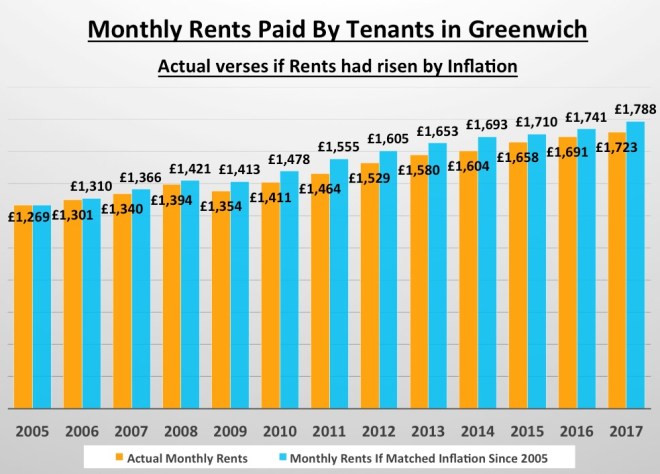
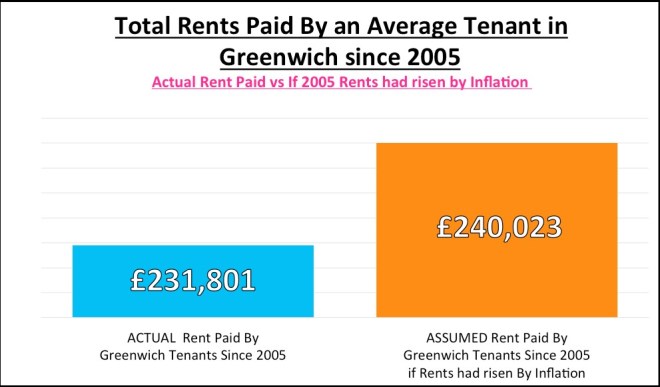
The hot topic at the moment is the cost of renting, as both political parties have seen mileage in wooing these Millennial Generation Renters. The average rent in Greenwich is currently £1,723 per month making this a big-ticket item on the monthly budget. I was inquisitive to find out exactly how much Greenwich Millennials will spend on rent by the time they reach their mid 30’s. The average age people leave home in the UK is 22; so looking at a Greenwich 22-year-old (or Millennial) who left home in 2005 then between 2005 and today that Greenwich Millennial will have shelled out £231,801 in rent.

It’s no wonder local Millennials can’t afford to buy a Greenwich home given their tremendous debt. This means younger Greenwich Millennials will probably carry on renting for the foreseeable future, simply because the prospect of buying a home is not yet achievable.. that is until you look more deeply at the numbers…

Graph 1

Looking at the chart above, the average rent of a Greenwich property in 2005 was £1,269 per month (pm)  … if it had risen by inflation, today, that would be £1,788 pm. As I have already mentioned in the article, today it only stands at £1,723 per month. Looking over the last 12 years, adding up all the differences between what the average actual rent was compared to what it should have been if rent had gone up by inflation, the average Greenwich Millennial tenant would have paid £240,023.

Graph 2

This means that an average 35-year-old Greenwich Millennial tenant, who has been renting since 2005, is better off by £8,222 when comparing the actual rent paid compared to what it would have been if it had risen by inflation. In a nutshell, tenants have done well due to the sub-inflation growth in rents.

In fact, if you recall I mentioned in an article a few weeks ago, the older Greenwich Millennials are starting to use those savings and are gradually shifting towards home ownership. They are finally catching up with the British homeownership dream as Bank of Mum and Dad help with the deposit. Also, the scrapping of Stamp Duty from the Government starts to kick in together with the realisation that if the 5% mortgage deposit can be scrapped together (yes, 95% first time buyer mortgages have been available since 2009), it is still a lot cheaper to buy than rent, meaning this will unquestionably drive demand for Greenwich homes for sale – good news for Greenwich homeowners.

… and what does this mean for Greenwich landlords?

Well the vast majority of younger Millennials are still renters and I foresee this to be the case for at least the next ten to fifteen years. Landlords will need to keep improving their properties to ensure they get the best tenants and they will see a much higher rent achieved. Millennials will pay top dollar for a top dollar property. It is important to do things correctly as making money won’t be as easy as it has been over the last twenty years.  With a greater number of properties on the market .. comes greater choice. Don’t buy the first thing you see, buy with your head as well as your heart … because as I promised a few weeks ago, the first rule of Buy To Let Investment ….. “You are not going to live in the property yourself”